
Watch: a good blade drive vs a worn one
This short animation shows a new blade drive and a worn one side by side. Same sharp blade, different result.
What the blade drive does
The blade drive is the small plastic lever in the clipper head. The motor rocks it side to side, and its tip sits in a slot on the cutter (the top blade). Every stroke, it pushes the cutter across the comb (the bottom blade), and the cutter teeth cut the hair against the comb teeth.
Each brand calls it something different. Andis calls it the blade drive, Oster calls it the lever, Wahl calls it the drive lever and Heiniger calls it the turning lever. It isn't the hinge. The hinge just holds the blade on the clipper.
What happens when it wears
The tip of the blade drive is plastic and it pushes against a steel slot thousands of times a minute, so over time it wears round and gets loose in the slot.
Once it's loose, part of every stroke is wasted taking up the slack before the cutter moves. The cutter stops short of a full stroke, so some of the hair gets pushed and chewed instead of cut.
- Lines or tracks left in the coat
- The blade drags or pulls the coat
- More rattle and noise than usual
- Freshly sharpened blades feel blunt straight away
Why sharpened blades can seem worse
Old blades that have loosened up over time can hide a worn blade drive. When a freshly sharpened blade with the right tension goes on the same clipper, the worn drive can't move it properly, so it feels like the sharpening made things worse.
Before you loosen the blade screws or blame the sharpening, check the blade drive.
How to check your blade drive
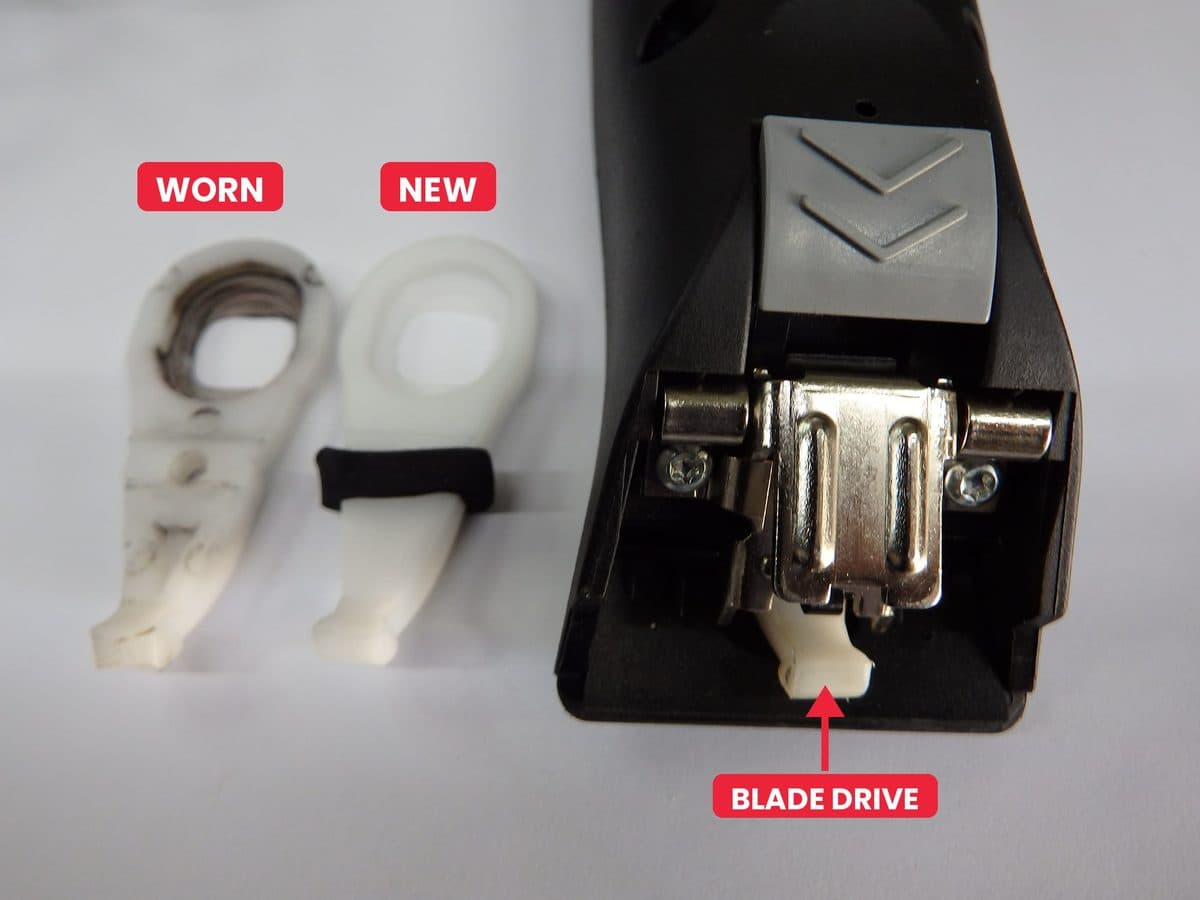
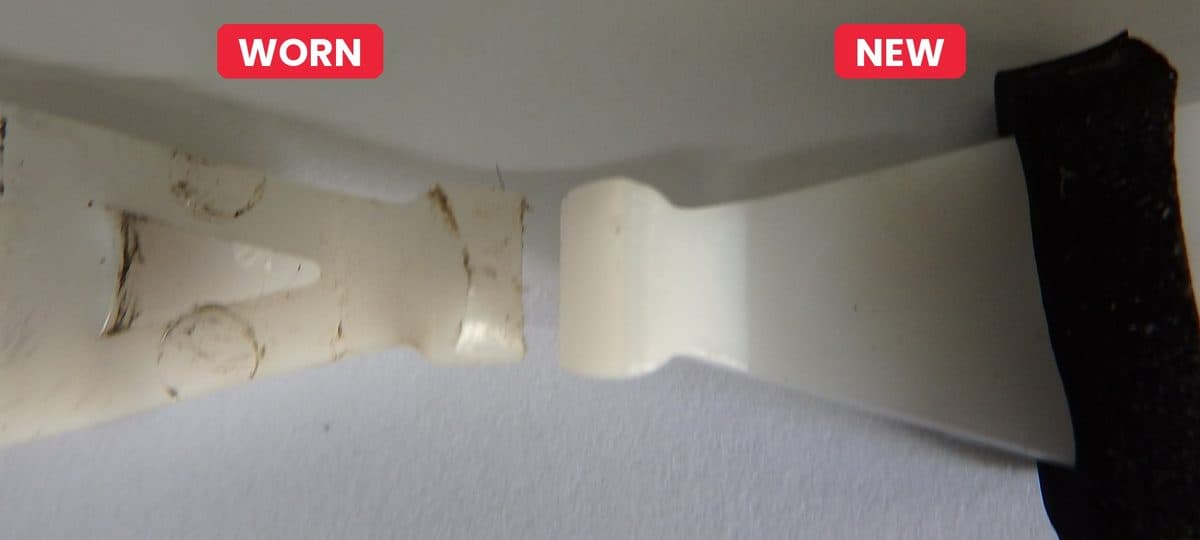
- Switch the clipper off (or unplug it) and take the blade off
- Look at the tip of the blade drive — new is square at the tip, worn is rounded
- On Andis clippers, do the squeeze test: squeeze the two plastic sides of the blade drive together. If they move in more than they should, it's worn
- Still not sure? Try a second good blade. If two good blades both cut poorly on the same clipper, the clipper is the problem, not the blades
Replacing the blade drive
Blade drives are a cheap part, and on most clippers you can swap one in a few minutes with a screwdriver. Follow the instructions for your clipper.
How often depends on how much you clip. Busy groomers clipping several dogs a day may need a new one every 6–8 weeks, while home users can go much longer. A good habit is to check it every time you get your blades sharpened.
Other things to check
- Blades back from sharpening: pat off the blade wash with a paper towel or clean rag and oil the blades before use
- Oil the blades regularly while you clip
- Clean out packed hair around the blade drive and hinge
- Check the hinge isn't worn and its screws are tight
- Make sure the coat is clean and dry before clipping
Animal clipper blade sharpening, drop-off or mail-in
I sharpen animal clipper blades in Campbelltown NSW, with drop-off by appointment or mail-in from anywhere in Australia. Text or email me a photo of your blades first and I'll give you a quote.